Currently Empty: $0.00
Candle making blends art, craft, and chemistry. At its heart lies the interaction between fragrance oils and wax, which determines scent throw (how well the aroma fills a room), burn quality, appearance, and safety. Whether you’re a novice testing your first batch or an experienced maker refining formulations for products like those at The Angelina Store, understanding these principles ensures consistent, high-performing candles. This deep dive covers the science, practical techniques for beeswax, soy, and coconut waxes (these are the three waxes I’m most familiar with), fragrance load calculations, supplier options, essential vs. fragrance oils, common pitfalls, wick testing, and scent blending.eo.
The Chemistry: Do Fragrance Oils “Bind” with Wax?
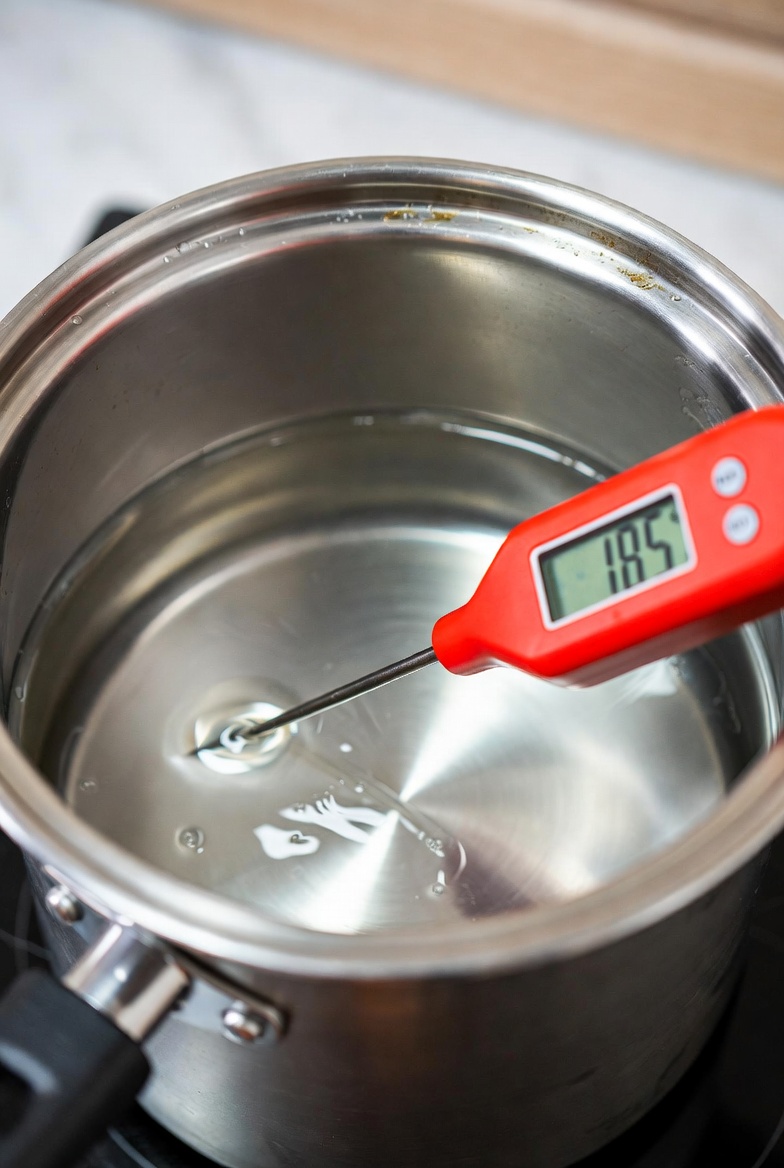
When I first started making candles, I dutifully followed instructions to heat the wax to 185 degrees Farenheit, because at that temperature, the wax “binds” with the fragrance oils (FOs). When the wax reaches the correct temperaturet, I remove it from the heat, add the fragrance oil, set a timer for 90 seconds and begin to stir (gently, so as not to get air bubbles in the wax). During that 90 seconds, I have questions.
FOs and wax do not form a true chemical bond, but rather form a homogeneous solution or mixture when the wax is molten. Wax molecules (long hydrocarbon chains in paraffin or triglycerides in natural waxes) and fragrance molecules (a blend of synthetic or natural aroma compounds) disperse evenly in the liquid phase. As the wax cools and solidifies, the fragrance molecules become physically trapped within the crystalline structure of the wax.
This physical entrapment, not molecular bonding, enables scent release. During burning, heat melts the wax pool, volatilizing the fragrance for “hot throw.” “Cold throw” (unlit scent) relies on surface evaporation and diffusion. Curing time (days to weeks) allows better integration and even distribution, reducing issues like separation. Claims of “binding” are informal shorthand; the key is achieving a stable solution below the solubility limit of the fragrance in that wax.
Factors affecting the mixture:
Temperature: Higher heat improves solubility and dispersion but risks degrading volatile compounds.
Stirring: Thorough mixing prevents separation.
Wax polarity and structure: Natural waxes like soy (hydrogenated soybean oil) have different solubility profiles than beeswax (esters and hydrocarbons).
Wax-Specific Interactions and Best Addition Temperatures
Different waxes have unique melting points, crystalline structures, and oil-holding capacities, influencing fragrance performance.
Beeswax: Naturally fragrant with a higher melting point (~144–149°F / 62–65°C). It holds fragrance well but can overpower delicate scents with its honey-like aroma. Add FOs at 160–165°F (71–74°C) after melting, and pour around 155–160°F. Beeswax’s denser structure may require longer curing (up to 7 days). It offers excellent burn quality but lower fragrance load tolerance (typically 6–8%).
Soy Wax: Popular for its clean burn and eco-credentials, soy has a lower melting point (~120–130°F / 49–54°C) and a more open crystalline structure that can lead to better hot throw but also frosting or sweating if overloaded. Heat wax to ~185°F (85°C) or per manufacturer guidelines (often 175–200°F to expand molecules), add fragrance at 180–185°F, stir thoroughly, and pour at lower temps (e.g., 135–150°F depending on blend). Soy often needs higher loads (8–12%) and longer curing (1–2 weeks) for optimal scent.
Coconut Wax (often blended, e.g., with soy or apricot): Creamy texture, excellent scent throw, and smooth burn. Melts lower; heat to 200°F+ for optimal performance in some blends, add fragrance around 175–185°F, and pour at 165–185°F. Coconut’s high oil content aids fragrance solubility but can affect wick performance.
General tip: Always follow your specific wax manufacturer’s guidelines. Add fragrance when the wax is fully homogeneous (clear, not cloudy). Overheating can flash off volatiles; underheating leads to poor dispersion.
Calculating Fragrance Loads
Fragrance load is the percentage of fragrance oil relative to the wax weight (not total candle weight). Formula: FO (oz) = Wax Weight (oz) × (Desired Load % / 100)
For a 10% load with 8 oz wax: 8 × 0.10 = 0.8 oz FO (total candle ~8.8 oz).
Start at 6–8% and test upward. Most waxes max out at 8–12%; exceeding solubility causes problems. For blends, calculate based on total wax weight. Tools like batch calculators or simple spreadsheets help scale production.
Suppliers: Candle Science and Alternatives
Candle Science stands out as a go-to for reliable, high-quality FOs formulated specifically for candles but their fragrance oils are also made to work across a variety of media besides candles: lotions, room sprays, soaps, incense, diffusers, etc. Their line is 100% phthalate-free, adheres to RIFM/IFRA standards, and offers strong performance data (e.g., scent throw ratings). Many makers praise consistency, clean burn, and variety.
Other strong options include:
Vine Vida: Offers phthalate-free candle FOs with good reviews for throw in some scents (e.g., lemongrass); mixed feedback on strength and value—test thoroughly.
Plant Guru: Phthalate-free, alcohol-free premium FOs suitable for candles, soaps, etc. Affordable with broad selection; users report good results but check for batch variability.
Veda Oils: Supplies FOs and essentials; quality varies by report—some positive for aroma, but verify purity for candle use. Be prepared to struggle getting the plastic plug out of the aluminum bottle; pliers required! Careful not to spill.
Other Suppliers: There are plenty of more suppliers, too many to list here, but if I need a fragrance oil or element that are not offered by my go-to suppliers, I go looking.
Prioritize suppliers providing SDS sheets, flash points, and usage recommendations. “Clean” labels (phthalate-free, paraben-free, Prop 65 compliant) are increasingly standard and preferred for health-conscious makers and customers.
Oh – one more reason Candle Science is my go-to fragrance oil supplier: free samples of your choice of fragrance oil for every order over $25, and their fragrance flights and samplers. I recently ordered the “Fine Fragrance” sampler and already have several new projects in the pipeline using these fragrances. I really can’t recommend Candle Science enough.

Essential Oils vs. Fragrance Oils: Pros, Cons, and Burn Performance
Fragrance Oils (synthetic or nature-identical blends): Superior for candles due to stability at high temps, strong/long-lasting throw, cost-effectiveness, and custom scent profiles. They withstand burning better without degrading. Cons: Less “natural” appeal; some may contain undisclosed synthetics (choose phthalate-free).
Essential Oils (pure plant extracts): Natural, with potential aromatherapy benefits. Pros: Perceived purity, therapeutic properties. Cons: Expensive (especially at candle loads), volatile (poor hot throw, evaporates or burns off), lower flash points (fire risk), variable performance, and potential skin/respiratory irritation when burned. Not ideal as primary scent for strong throw; better for subtle blends or diffusers.
Blending both is possible but requires testing—EOs may accelerate curing needs or alter burn.
Risks of High Fragrance Loads and Troubleshooting
Exceeding solubility leads to:
Sweating/Oiling: Fragrance seeps out as beads or wet spots.
Frosting: Crystalline bloom on soy surfaces (cosmetic, not functional).
Mushrooming: Excessive carbon buildup on wick from incomplete combustion (often high FO + large wick).
Poor Burn: Soot, tunneling, weak flame, or smoking.
Solution: Reduce load, test wicks, ensure proper temps/mixing, and cure fully.
Wick Testing: Critical for Scent and Performance
Wick size/type must match wax, container diameter, and fragrance. Resin/woody or heavy scents burn differently (hotter/slower) than citrus/floral (lighter, faster evaporation). High vanillan content can cause wicks to split or mushroom. Test multiple wicks at your target load: observe flame height, melt pool (should reach edges without overheating), soot, and throw. Trim wicks to ¼” before each burn. Different scents may require wick adjustments—always full 4–6 hour test burns.
Scent Blending: The Art and Science
See our blog post, Scent Blending for Candle Makers, for the basics on scent blending, the 3:5:2 top/mid/base notes, and other useful scent blending tops.
Additional Helpful Info for Candle Makers
Curing: A week (wick testing only) to 14 days to maximize scent throw.
Safety: Use IFRA-compliant FOs, proper ventilation, fire-safe containers. Monitor for allergies.
Sustainability: Natural waxes + clean FOs appeal to eco-conscious buyers.
Testing Protocol: Small test candles first; log temps, loads, wicks, and observations.
Scaling: Weigh precisely (grams preferred); use calculators for batches.
Tags: Candle MakingWick TestingCandle Troubleshootingwick mushroomingwax spillartisan candlessoy wax candlescandle sciencefragrance oilswax interactionscent throwfragrance chemistrybest practices candle makersparaffin waxessential oils vs fragrancehot throwcold throwcandle craftingsuperior scentscandle formulationscent bindingwick selectionDIY candle scienceflash pointhot burnwick troublesplitting wick
